Archive | May 2020

Spring 2020: Rhododendron Elepidotes

As though we don’t have enough trouble with a killer virus, now we have to deal with killer insects — the Asian Giant Hornets a/k/a the “murder hornets.” They decapitate bees and then feed on them. They can wipe out a hive in a matter of hours.

And they don’t stop with bees. In Japan, hornet stings have killed up to fifty people a year. Beekeepers are especially vulnerable; a hornet’s stinger can easily puncture a beekeeping suit. (As one beekeeper described the stings: “It was like having red-hot thumbtacks being driven into my flesh.”)

Asian Giant Hornets are aggressive killers and now they are in the U.S.  Several were found in Washington State. Thankfully, according to the Cornell Cooperative Extension, they have not migrated East — yet.

For more info on the hornets — and for all other horticultural inquiries — call the Cornell Phone Help Line: 631-727-4126, Monday-Friday, 9 a.m.-12 noon. Or email: sib7@cornell.edu or aw242@cornell.edu.  An invaluable resource.

Before moving on to my summer garden, I want to feature, for your consideration, a choice group of May-blooming, large-leaf, evergreen elepidote Rhododendrons:

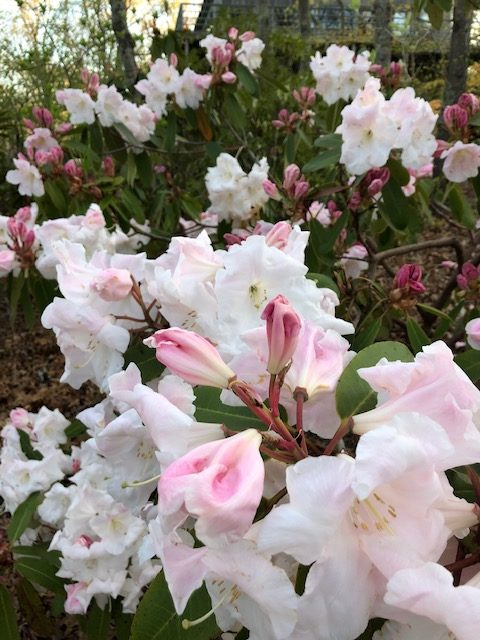
Rhododendron ‘Loderi King George’ is one of my all-time favorite plants. Bred in Great Britain, King George received an Award of Merit from the Royal Horticultural Society. From pink buds the shrub produces masses of gorgeous, large, richly-perfumed snow-white blossoms in May. The fragrance carries on the air in the garden — and in the house. Photos below.
copyright 2020 — Lois Sheinfeld
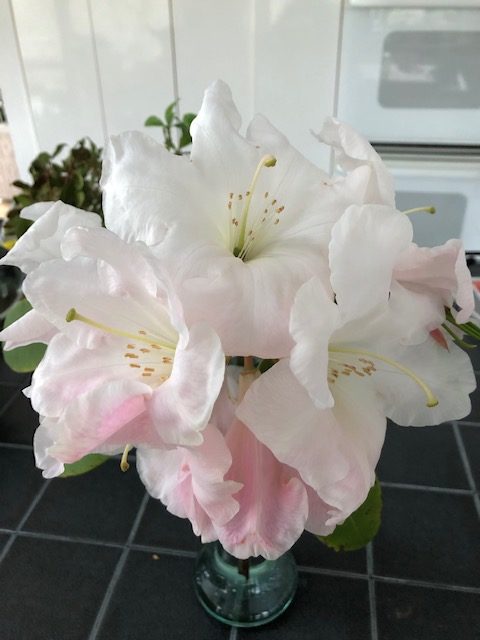
copyright 2020 — Lois Sheinfeld

For decades in my zone 7 organic garden the plant has been a hardy, reliable yearly bloomer. The evergreen foliage does suffer winter damage but it is quickly replaced in Spring by new green growth. Provide acid, well-drained soil in a shady site sheltered from wind.


Rhododendron ‘Mario Pagliarini’ is another sweetly fragrant, hardy May bloomer. Dressed in healthy evergreen foliage and abundant, large, lilac-pink flowers — that age to white with traces of pink — Mario is a wondrous sight to see. And to smell — the fragrance carries on the air. Photos below.
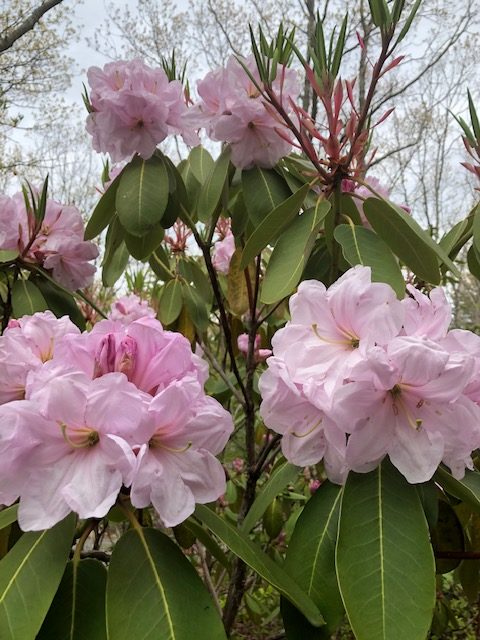
copyright 2020 — Lois Sheinfeld
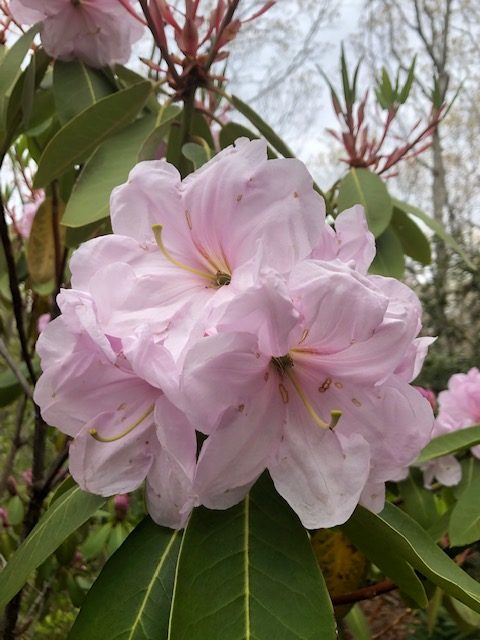
copyright 2020 — Lois Sheinfeld

After 15 years or so my shrub is now about eight feet high and nine feet across, so provide adequate space for Mario to express himself. R. ‘Mario Pagliarini’ thrives in shade and rich, acid, well-drained soil.


Rhododendron ‘Vinecrest’ is a multiple-award-winning shrub bred for extreme winter hardiness. I can attest to the breeder’s success. After suffering single-digit frigid weather, Vinecrest’s evergreen foliage remained in pristine condition and its flower buds were undamaged.  Winter hardiness is an essential attribute. Yet, for me, it is the ethereal beauty of the May butter-yellow flowers and peach-colored buds that make Vinecrest irresistible. Provide shade and rich, well-drained acid soil. Photos below.
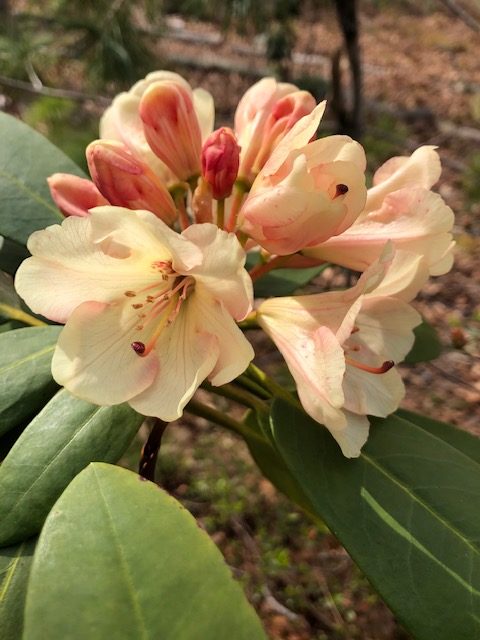
copyright 2020 — Lois Sheinfeld
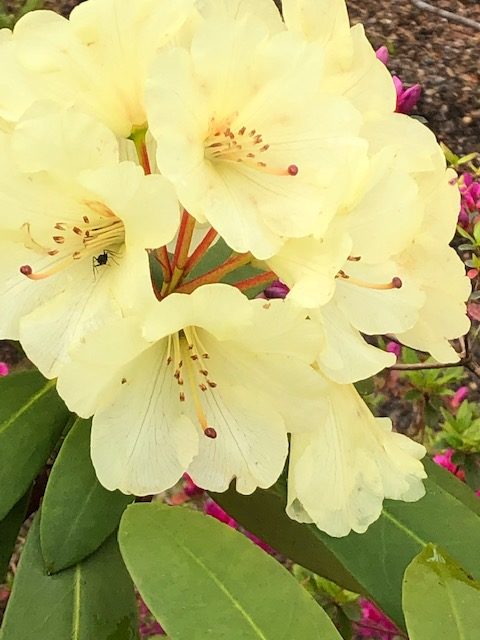
copyright 2020 — Lois Sheinfeld

(Note: R.’Vinecrest’ is not fragrant, though some have suggested otherwise.)


Embrace the exciting world of Rhododendrons. Your garden will thank you.


Finally, my Grandpets would like to say hello. In order of appearance, my beautiful Grandcat, Callie — who never met a box she didn’t like — followed by my lovable Granddogs, Sammy and Zoe. Rescue pets all.

copyright 2020 — Jessica Amsterdam
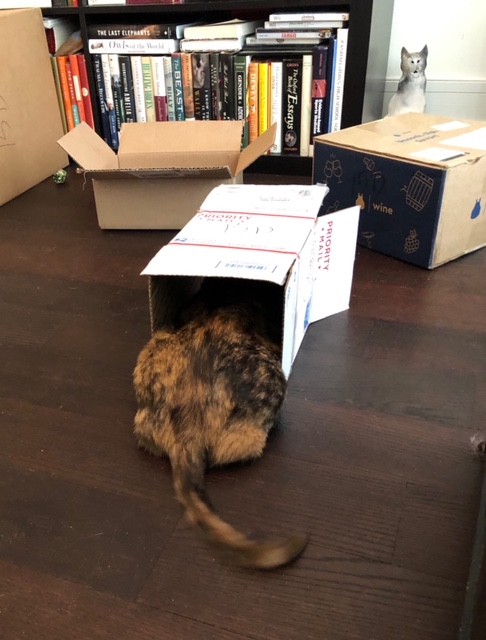
copyright 2020 — Jessica Amsterdam

copyright 2020 — Ashley Cox

copyright 2020 — Ashley Cox


Be well. Stay safe.
Spring 2020: Mezitt Rhododendron Part 2

Part 2

All of the Mezitt Rhododendron lepidotes featured here are very cold-hardy, disease/insect resistant, and do well in both sun and shade:

Rhododendron ‘Mrs. J.A. Withington 111’

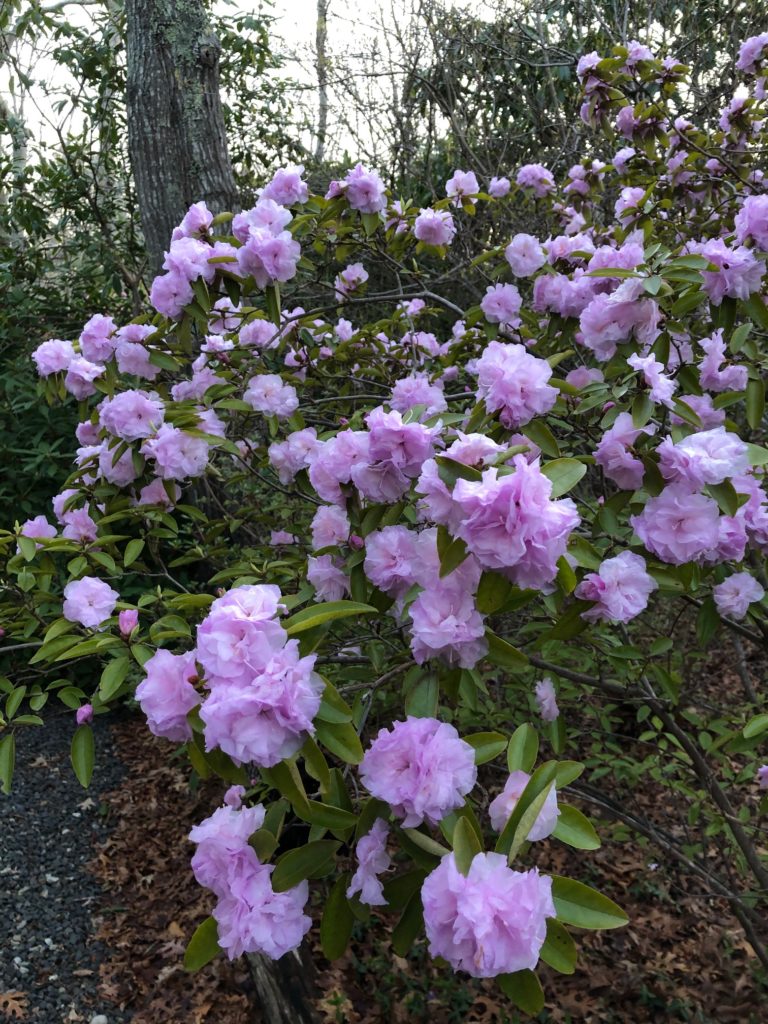
I adore R. ‘Mrs. J.A. Withington 111.’ In April/May this flamboyant blue blood is entirely draped in a glorious cloak of purple powder puffs. Quite a sensation. As a bonus, the shrub’s evergreen foliage turns bronzy-green in the Fall.

copyright 2020 – Lois Sheinfeld


Rhododendron ‘Lilac Crest’

R. ‘Lilac Crest’ is like a lilac-pink-white mini Mrs. Withington. It is more compact and its May flowers resemble little pom-poms. The semi-evergreen shrub’s flower buds are white with lilac-pink tips; when the white flowers fully open, they are flushed with color.

copyright 2020 – Lois Sheinfeld

copyright 2020 – Lois Sheinfeld


Rhododendron ‘Landmark’

Garden literature often styles R. ‘Landmark’ as a long-awaited red-flowering lepidote. In the right light and at a distance the flowers may look red. But, in truth, the showy May bloom is a rich dark pink — highly attractive to bees. In Autumn the evergreen foliage turns mahogany-bronze.

copyright 2020 – Lois Sheinfeld


For decades the chorus of six captivating Mezitt Rhododendron lepidotes featured here and in Part 1 have flourished in my shady, organic garden and I treasure them all.

My friend the late Hank Schannen, founder of Rarefind Nursery, was also an accomplished Rhododendron hybridizer. Here is Hank’s famous take on Rhododendron plant culture:

12 Criteria For Success With Rhododendron

  1. Drainage
  2. Drainage
  3. Drainage
  4. Drainage
  5. Drainage
  6. Drainage
  7. Acid pH
  8. Dappled shade
  9. Able to water when needed
  10. If containerized, loosen roots (viciously)
  11. When in doubt, plant HIGH
  12. Hmm—More DRAINAGE

Be well. Stay safe.

Spring 2020: Mezitt Rhododendrons Part 1

In 1899 a musical, Floradora, opened in London and was a smash hit. After a long run in England, the show crossed the pond and opened in New York to equal acclaim. The show’s fame was largely due to its Floradora Girls, a chorus of women — clad in pink, carrying frilly parasols — who captivated audiences.

In 2020, in my Spring garden, we treasure the chorus performance of Mezitt Rhododendron lepidotes — a captivating, flowering extravaganza in pink and purple:

Part 1

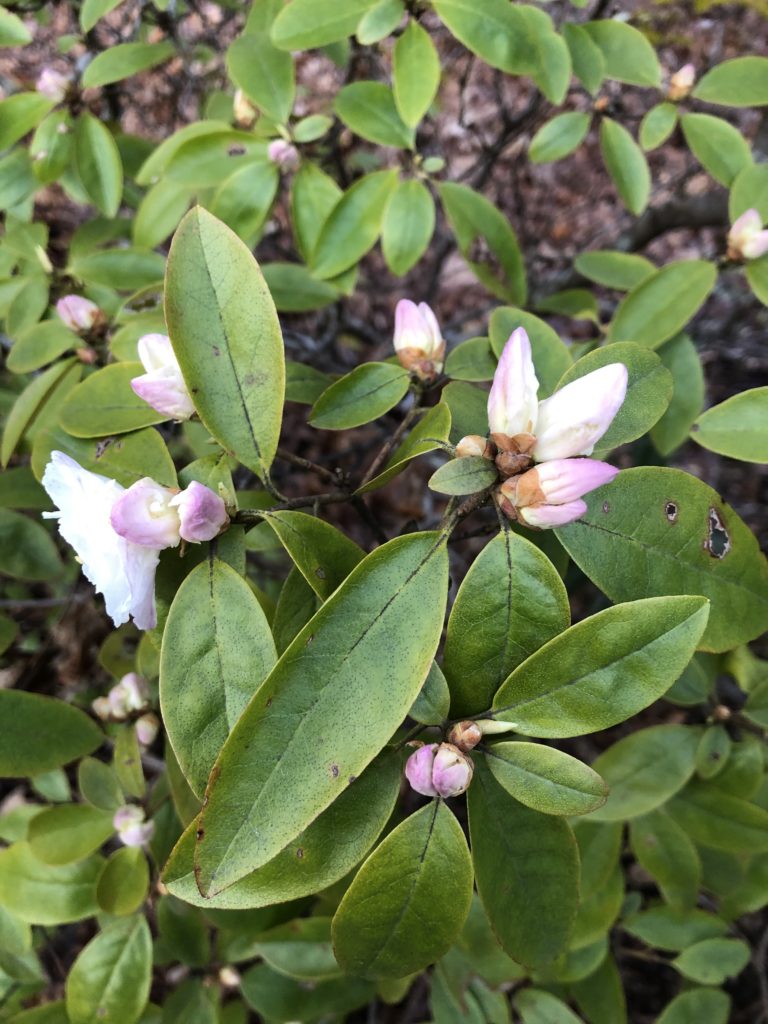
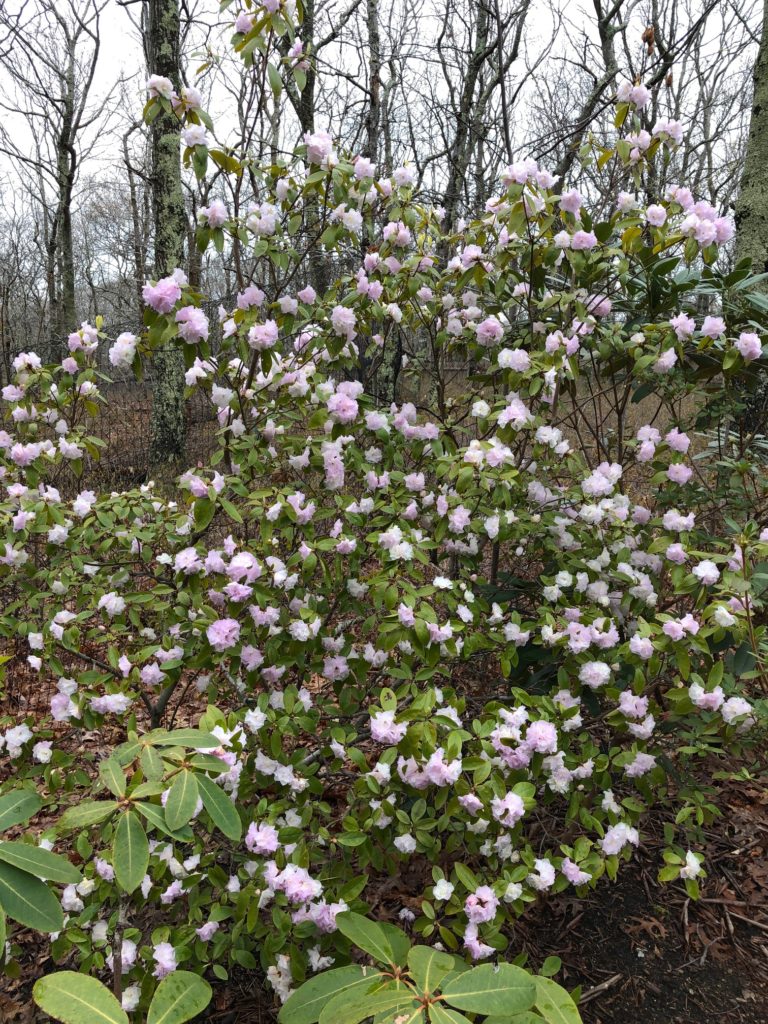
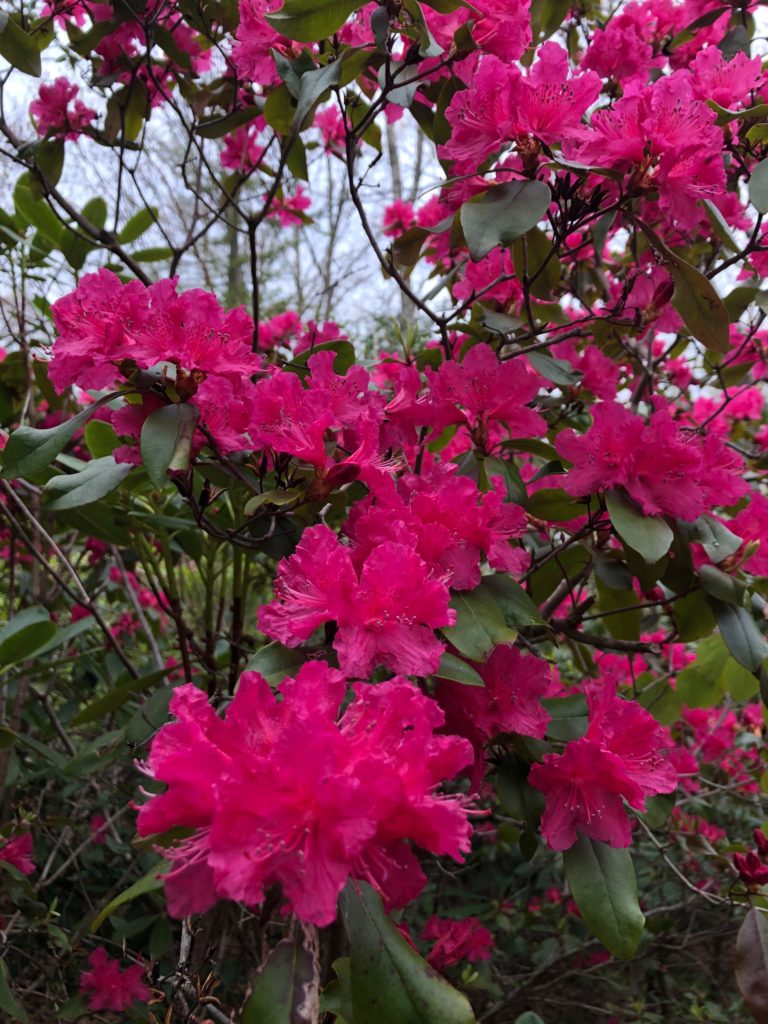
Rhododendron ‘PJM’

copyright 2020 – Lois Sheinfeld

copyright 2020 – Lois Sheinfeld

copyright 2020 – Lois Sheinfeld

The Mezitt-Weston Nurseries’ breeding program was launched with the introduction of the rightly popular Rhododendron ‘PJM’, named for Weston’s founder, Peter J. Mezitt. In April, glowing lavender-pink blossoms — favored by bees — blanket the shrub, and in Autumn\Winter the evergreen, small-leafed foliage turns a deep mahogany-black.

PJM is very cold-hardy, disease and pest-resistant, and thrives in both sun and shade. (Note: All of the Rhododendrons featured here share these attributes.)


Rhododendron ‘Weston’s Pink Diamond’

copyright 2020 – Lois Sheinfeld

copyright 2020 – Lois Sheinfeld

This luminous, semi-evergreen beauty starred in the 1983 sixtieth anniversary celebration of Weston Nurseries. Graced in April with luxuriant, ruffled, double silvery-pink flowers, and then in Autumn with resplendent foliage in shades of red, orange and gold, R. ‘Weston’s Pink Diamond’ has been celebrated in my garden for twenty-five years.


Rhododendron ‘Weston’s Aglo’

As Pink Diamond’s flowers fade in May, its garden side-kick, R.’Weston’s Aglo’, comes into its own with abundant clusters of radiant pink flowers with vibrant red flares. Bees love the flowers as much as I do. In the Fall, the glossy evergreen foliage turns a rich bronze-green. R ‘Weston’s Aglo’ has flourished in my organic garden for more than two decades. (The shrub is a sibling of the popular R.’Olga Mezitt’—Aglo is Olga spelled backwards.)

A copyright 2020 – Lois Sheinfeld

copyright 2020 – Lois Sheinfeld

copyright 2020 – Lois Sheinfeld

Stay Tuned: Part 2 Next Post.

Be well. Stay safe.